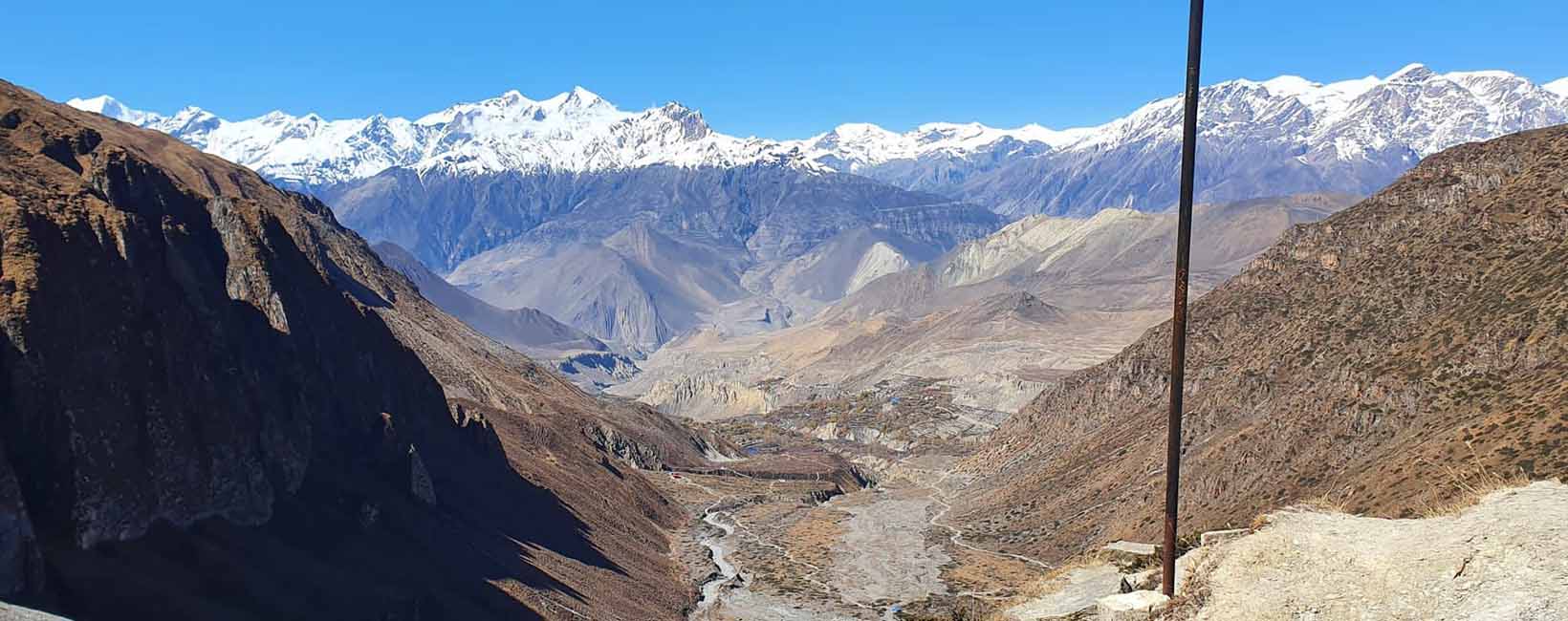
12 days Annapurna Circuit Trek
Trip Overview
The Annapurna Circuit Trek is a breathtaking adventure that takes you through diverse landscapes, cultures, and some of Nepal’s most iconic mountains. The journey begins with a scenic 7-hour drive from Kathmandu to Besisahar, the starting point of the trek. As you travel, you’ll pass lush valleys, terraced fields, and get your first views of snow-capped peaks like Manaslu and Ganesh Himal.
From Besisahar, the trek gradually ascends through villages like Bahundanda, Jagat, and Dharapani, following the winding Marsyangdi River. Along the way, you’ll experience the local culture, with Tibetan influences and beautiful landscapes transitioning from green hills to rugged, high-altitude terrain. Reaching Manang at 3,500 meters provides a chance to rest and acclimatize, surrounded by towering peaks like Annapurna III and Gangapurna. You can explore the village and attend a lecture on altitude sickness to prepare for the challenges ahead.
The trek continues with a climb to Thorung Phedi, the base camp for the famous Thorung La Pass. Reaching the summit at 5,416 meters (17,769 feet) offers stunning views of the Himalayas and the Tibetan plateau. The descent leads to Muktinath, a sacred site for both Hindus and Buddhists, where you can reflect on your journey.
After visiting Muktinath, you’ll descend into Lower Mustang and take a scenic drive back to Pokhara, a peaceful lakeside town. The drive offers incredible views of the Annapurna and Dhaulagiri ranges. In Pokhara, you can unwind and reflect on the incredible experiences of the trek.
The Annapurna Circuit Trek is a complete adventure—challenging, spiritually enriching, and culturally immersive. From the vibrant village life to the towering heights of Thorung La Pass, this trek provides memories and experiences that will last a lifetime.
Trek Highlights:
- Stunning views of Annapurna, Manaslu, and Dhaulagiri peaks
- Cross the famous Thorung La Pass (5,416 meters / 17,769 feet)
- Visit the sacred Muktinath temple
- Explore charming villages like Manang, Pisang, and
- Acclimatization day in Manang
- Experience Tibetan culture and monasteries
- Relax in Pokhara at the end of the trek
Trip Itinerary
Today marks the start of your adventure as you board a bus in Kathmandu for a 7-hour drive to Besisahar (760 meters / 2,490 feet). The road winds through the lush countryside of Nepal, with the landscape changing from the hustle of Kathmandu to serene rural villages and terraced fields. Along the way, you'll catch glimpses of the mighty Himalayas in the distance, building excitement for the trek ahead.
As you journey, you’ll pass through bustling towns, small riverside settlements, and vibrant marketplaces. The diverse scenery is a beautiful contrast to the busy streets of Kathmandu, giving you a first taste of Nepal's natural beauty. After a long day of travel, you’ll arrive in Besisahar, where you can rest and refresh at a cozy teahouse. It’s a peaceful stop before you start the trek and dive deeper into Nepal’s heartland.
This drive is not just about getting from one place to another—it’s a transition, from the chaotic energy of the capital to the calm, rural landscapes of the Annapurna region, setting the tone for the journey ahead.
After an early breakfast, your trek begins with a suspension bridge crossing at Bhulbhule, followed by a beautiful walk past a cascading waterfall. The mighty Manaslu peaks slowly reveal themselves as you pass through the lush rice terraces. The gentle ascent continues until you reach Ngadi, a charming village with quaint shops, where you can take a short break.
From Ngadi, the trail steepens as you climb to Bahundanda (1,310 meters / 4,298 feet), perched high on a ridge. Known as the "hill of the Brahmins," it offers stunning views of the surrounding valleys and mountains. The day’s trek provides a perfect blend of natural beauty and cultural immersion, with a rewarding sense of accomplishment as you reach the peaceful village.
The day starts with a descent from Bahundanda, as you follow a steep trail through green rice terraces. After crossing a stream at the bottom of a small waterfall, you leave the hillside high above the river and make your way to Hani Gaon.
Ahead, the Marsyangdi Valley opens up in a dramatic V-shape, and the trail winds down to Syange, following the river for a while. The path then climbs steeply, rising 300 meters above the riverbed, before descending again to the picturesque village of Jagat (1,300 meters / 4,265 feet). Here, you’ll spend the night at a cozy Tibetan-run lodge, where the peaceful atmosphere and hospitality will provide a welcome end to your day of trekking.
This segment of the trek offers a perfect mix of lush landscapes, river views, and local culture, setting the tone for the adventure ahead.
From Jagat (1,300 meters / 4,265 feet), the trail begins with a steep climb through dense forest. Soon, you reach a teahouse with stunning views of a waterfall on the opposite bank of the river. After a short break, continue to Chamje(1,430 meters / 4,692 feet), a village bustling with traditional teahouses and horses.
The path then descends to the river, crosses a suspension bridge, and begins the steep climb to Sattale(1,650 meters / 5,413 feet). From there, the trail winds above the river, offering beautiful views of Tal (1,700 meters / 5,577 feet) nestled in a river valley. Beyond Tal, the valley narrows, and the path becomes winding and carved into the rock.
As you pass Karte (1,800 meters / 5,906 feet), the trail drops again to the river, and you cross another suspension bridgebefore climbing to Dharapani (1,860 meters / 6,100 feet). Here, you can rest and reflect on a day filled with stunning views and a steady climb that brought you closer to the heart of the Annapurna region.
The trek from Dharapani (1,860 meters / 6,100 feet) to Chame (2,670 meters / 8,760 feet) takes you through pine and oak forests, past Danagyu, and a thundering waterfall. After an hour, you’ll reach Koto (2,600 meters / 8,530 feet), where you can enjoy a break at a Tibetan teahouse with stunning views of Manaslu(8,163 meters / 26,781 feet).
The trail continues to Koto Qupar, where the towering Annapurna II (7,939 meters / 26,043 feet) looms overhead. Many locals here are from the Nar Phu Valley, a gateway to this remote area.
In less than an hour, you’ll reach Chame, the administrative center of Manang, where small shops, tea-houses, and an army post create a lively atmosphere. It’s a perfect place to rest and take in the beauty of the Himalayas.
The trek from Chame (2,670 meters / 8,760 feet) to Pisang (3,300 meters / 10,827 feet) takes you through cool, peaceful forests, where the air is fresh and the surrounding peaks loom above. As you walk, you’ll be treated to breathtaking views of the Annapurna Range as the trail gently ascends.
After about five hours of trekking, you’ll arrive in Pisang and have the afternoon to explore the village. For even more stunning views, you can hike up to Upper Pisang, where the panoramic vistas of Annapurna II(7,939 meters / 26,043 feet) and Annapurna III (7,555 meters / 24,786 feet) will take your breath away. It’s a peaceful, reflective moment in the heart of the Himalayas.
The trek from Pisang (3,300 meters / 10,827 feet) to Manang (3,540 meters / 11,300 feet) is a scenic journey through a landscape dotted with dramatic mountain views. The village of Manang, known for its 500 flat-roofed houses, feels like a bustling oasis surrounded by towering peaks. You’ll pass Annapurna III (7,555 meters / 24,786 feet) and Gangapurna(7,455 meters / 24,460 feet), with an impressive icefall cascading down the valley.
In Manang, you’ll find yourself among trekkers from all over the world, along with bakeries, teahouses, and lodges that give the village a lively, welcoming atmosphere. The streets are charming, leading you toward the Thorung La pass. You can take a moment to relax in your guesthouse, enjoy hot tea or a cold beer, and soak in the peace of the mountains.
For an insightful experience, you can attend a lecture on altitude sickness by the Himalayan Rescue Association, ensuring you're well-prepared for the altitude as you continue your trek.
Today in Manang (3,540 meters / 11,300 feet) is dedicated to acclimatization, giving your body time to adjust to the altitude before continuing your trek. There are several options to explore at a relaxed pace, ensuring you don’t overexert yourself.
You can take a gentle hike to Ice Lake, or visit the Hundred Rupee Lama at a cave above Manang. For those interested in history and culture, a two-hour walk to Milarepa's Cave across the river from Braga offers both a physical and spiritual experience. Alternatively, you can attend the Himalayan Rescue Association lecture to learn more about altitude sickness and how to stay healthy at high elevations.
For a more leisurely day, explore the village’s famous bakeries, or simply relax at your guesthouse. Sitting by a warm fire and gazing at the towering peaks around you, you’ll feel a deep sense of peace and connection to the mighty Himalayas. Just a short 300-meter hike up will also help with acclimatization without pushing your limits.
Today’s trek is shorter, but the climb to Yak Kharka (4,060 meters / 13,320 feet) still takes us higher, so we proceed at a relaxed pace. As we ascend, the air thins, and the landscape becomes more rugged, with expansive views of the surrounding peaks.
Along the way, you’ll likely encounter Manangi horses galloping through the trail, adorned with colorful Tibetan wool saddle blankets. Their riders, often dressed in traditional attire and jingling bells, create a lively, rhythmic sound as they pass by. The atmosphere feels almost timeless, as the locals live in harmony with the land and the animals.
The route takes us past the villages of Tengi and Gunsang, both offering glimpses into the local way of life before we finally arrive at Yak Kharka. This serene, high-altitude meadow is a perfect spot to catch your breath, soak in the mountain views, and reflect on the journey ahead.
Today’s hike is relatively short but crucial as we make our way to Thorung Phedi (4,450 meters / 14,600 feet), the base camp for Thorung La. The trail is an easy, two-hour climb through rocky terrain, leading to the Thorung La Base Camp Hotel, where we’ll take a well-earned break and have an early lunch.
After lunch, we continue our ascent for another hour to reach High Camp, where we’ll rest and prepare for the big day ahead—crossing Thorung La Pass. This is a critical point in the trek, and we want to make sure we're well-rested before tackling the challenging pass.
For those feeling the effects of altitude sickness, there’s the option of staying at Thorung Phedi Base Camp, which is situated at a slightly lower elevation and offers a bit more time to acclimatize. Getting enough rest today is key to ensuring a safe and successful journey across the pass tomorrow.
As we settle in for the night, the excitement builds for what’s to come, but it’s important to get an early night to ensure we’re ready for the early morning ascent to Thorung La.
Today is the big day of your adventure—the climb to Thorung La Pass (5,416 meters / 17,769 feet), one of the highest points on the Annapurna Circuit. You'll start early, with the morning chill in the air, as you begin your ascent. As you get closer to the top, the excitement builds. When you finally stand at the pass, you’ll be rewarded with an unforgettable view: towering snow-capped peaks stretch across the horizon, and the vastness of Mustang lies below you. It’s a moment of pure awe.
The descent begins gently at first, but be careful—your body needs time to adjust to the altitude change. A well-deserved break at Chabarbu, a cozy tea house, gives you the chance to catch your breath, sip some tea, and enjoy a snack before continuing your journey.
As you make your way down, the landscape begins to change, from rocky paths to more fertile land. Finally, you’ll arrive in Muktinath (3,710 meters / 12,172 feet), a sacred temple site. The peacefulness here feels special, and many trekkers and pilgrims come here to pray and take a moment for themselves.
For those on a gap year adventure, this day is one of the highlights of your trek. You’ve reached the top of one of the highest passes in the Himalayas, and now you’re surrounded by the spiritual energy of Muktinath. It’s a perfect moment to reflect on how far you’ve come, not just physically, but emotionally, too. This day will be one you carry with you forever.
After your time at Muktinath, it’s time to begin the journey back to Pokhara. The drive is a mix of emotions—leaving behind the awe-inspiring mountain views, but also feeling a sense of accomplishment.
The road winds through the rugged landscapes of Mustang, gradually descending into lush valleys, terraced fields, and vibrant villages. As you make your way back to Pokhara, you’ll reflect on the challenges, the beauty, and the serenity of the trek.
For those on a gap year adventure, this journey marks the end of an unforgettable chapter. You’ve pushed yourself physically and mentally, immersed in the stunning Himalayas, and connected with Nepal’s rich culture. As you arrive in Pokhara, you’ll feel a deep sense of pride and fulfillment, knowing that you’ve completed an adventure that will stay with you forever.
What's Included

Included
- Tea House accommodation with standard meals
- Pokhara Lakeside - Nayapul - Pokhara Lakeside
- Experienced, English-speaking trek leader. For groups over 8, there will also be an assistant guide.
- Porter service: 2 trekkers share 1 porter (max 18 kg per porter, or 9 kg per trekker)
- Covering costs for guides and porters, including wages, meals, insurance, lodging, transportation, flights, and gear.
- Water purification tablets for safe drinking water.
- T shirt
- Upon request we can provide duffle bag
- Sleeping bag if required
- Assistance in case of health emergencies (covered by your travel insurance).
- Basic First-aid-kit
- TIMS and Annapurna conservation permit fees.
- All government, local taxes, and official fees.

Excluded
- Any bar bills (alcoholic drinks, mineral water, and cold drinks), cigarettes, client’s personal insurance and any kind of unforeseen expenses.
- Natural Calamities beyond our control and expenses incurred during rescue services.
- Comprehensive Travel/Medical Insurance that covers heli rescue
- Nepal Visa fees
- International Flights
- Personal expenses like shopping, snacks, bottled water, tea/coffee, cold drinks, hot showers, alcohol, Wi-Fi, phone calls, battery charging, extra porters, etc.
- Personal clothing and gear
- Tips for guides and porters (recommended)
- Any other costs or expenses not mentioned in the 'What's Included in 12 Days EBC Trekking Package
- All stay and meals in Kathmandu, before and after the trek
- Daily snacks (cookies) and seasonal fresh fruit
- Down Jacket
- Hiking boots
- Sun Glasses / Sun Hat
- Single Supplementary cost

Optional Service
- T shirt
- Upon request we can provide duffle bag
- Sleeping bag if required
- Trekking Permit
- Trekking Information Management System (TIMS)
- Price of Entrance Fee
- 15 Days Advance Booking required
- Down Jacket
- Hiking boots
- Sun Glasses / Sun Hat
FAQS
What is the Annapurna Circuit Trek?
The Annapurna Circuit Trek is often described as a life-changing experience. As you embark on this journey, you'll find yourself walking through breathtaking landscapes, from subtropical forests to rugged alpine terrain, and eventually crossing the mighty Thorong La Pass at 5,416 meters (17,769 feet). The trek is not just about the physical challenge; it’s about connecting deeply with nature, feeling the pulse of the mountains, and getting to know yourself better with every step.
The circuit offers something for everyone – from the peaceful, isolated highlands to vibrant mountain villages. The Annapurna range in the distance will stir your soul, and the warmth of the local villages will touch your heart. It’s a trek that leaves you breathless, not only from the altitude but from the sheer beauty of the landscapes.
How long does the Annapurna Circuit Trek take?
The Annapurna Circuit Trek typically takes around 12-14 days, depending on your pace and how much you want to immerse yourself in the experience. It’s a journey that will test your physical limits but also reward you with some of the most awe-inspiring landscapes on Earth. Every day brings new challenges, but also fresh rewards: vibrant green valleys, terraced fields, distant snow-capped peaks, and unforgettable sunrises.
What is the best time to do the Annapurna Circuit Trek?
The best time to trek is Autumn (September to November) when the skies are the clearest, and the temperatures are just right for trekking. Spring (March to May) is also a magical time, with rhododendrons in bloom, creating a sea of color against the backdrop of the snow-capped peaks. These seasons feel like the mountains themselves are welcoming you, with perfect trekking conditions and majestic views at every turn.
Is the Annapurna Circuit Trek difficult?
Yes, the Annapurna Circuit Trek is challenging, but it’s also deeply rewarding. You’ll face steep climbs, high-altitude passes, and the mental challenges of pushing yourself each day. But there’s a profound sense of accomplishment that comes with it, especially when you cross the Thorong La Pass at 5,416 meters. Standing there, surrounded by snow and ice, you’ll realize you’ve done something extraordinary.
It’s difficult, yes, but it’s also an opportunity for growth, both physically and mentally. Every step you take is a victory, and the challenges you face will leave you with memories that will last a lifetime.
Do I need to be physically fit for the Annapurna Circuit?
Physical fitness is important, but don’t worry if you’re not a seasoned trekker. It’s about building endurance, both physically and mentally. A regular fitness routine (like hiking, walking, or cycling) will help you prepare for the trail. The real strength, though, will come from your inner resolve.
On this trek, you’ll learn that it’s not about racing to the finish; it’s about enjoying each moment, savoring the beautiful scenery, and listening to your body. Trekking at altitude means there will be moments of fatigue, but it’s these moments that will make you feel alive, knowing you’re pushing your boundaries and achieving something incredible.
What is the highest altitude on the Annapurna Circuit Trek?
The highest point on the Annapurna Circuit is Thorong La Pass at 5,416 meters (17,769 feet). The air is thin, and the altitude can take a toll on your body, but standing at the pass is an emotional experience—one that fills you with pride and wonder. It’s one of those rare moments in life when you feel small in the grand scheme of things, yet simultaneously part of something much greater than yourself.
Can I do the Annapurna Circuit Trek independently or do I need a guide?
While it’s technically possible to do the trek independently, having a guide or porter is highly recommended. A guide is not just a person who leads you along the trail—they become your companion, sharing stories of the mountains, culture, and people. The journey becomes richer with someone by your side who knows the trails and can ensure your safety, especially in case of altitude sickness or challenging weather conditions.
Plus, having a guide allows you to focus on the beauty of the moment instead of worrying about navigation or logistics. And a porter can carry your gear, making the trek physically easier so you can enjoy the experience with a lighter heart.
Happy Customer's

Juan Gabriel Silva
ArgentinaNamaste! Dear one This trip has been the dream that I have been planning for a long time. I always wanted to contribute from the professional perspective while also immerging myself in the culture and nature of this unique region. Since childhood my goal has been to train as a doctor to help others. As I progressed through my studies my desire to heal the sick without expecting anything in turn, along with a deeper understanding of society and needs. The love for nature is a universal thing human instinct, and I am no exception. Visiting the mountains of Nepal, one of the world's most inspiring place. Amond the tallest peak the landscapes seem to touch the soul of those who experience this. In conclusion, this journey has been truly unique term. Every place in the world offers beautiful memories but in Nepal, I discovered a different kind of mystery. Its culture so different from my own religion and society left me with lots of memories.
Nov 06, 2024 | Medical Internship Program in Nepal
Miguel Ángel
Pamplona, SpainNamaste! I am very grateful and I felt so lucky to for living this experience. I have known Nepal really. your culture, your food your way of living and it’s been only two weeks a very short period but I will come back for sure. And I must say that everybody has treated me so kindly, so good, specially of course in this house and hospital. Thanks, a lot to Sushi, Prakash, Shreejaya (and sorry if I had not written your names properly..) and of course to Didi who has always been so kind and generous. Thank you so much.
Oct 26, 2024 | Volunteer in Nepal | Teach, Explore, and Make a Difference
Nicolas Peter
FranceNamaste! My departure is approaching only a few hours left to spend in Nepal and what can I say about this experience! When I decided this internship in Nepal, I was both excited and stressed by the unknown of a country more than 7000 km from home. But this stress quickly dissipated when I arrived in Nepal and met the wonderful people who are the vol Nepal volunteers. During my 12 week placement I had an incredible experience I met some lovely people and discovered another culture completely different from my own. Whether it was the humain experience the project in Rolpa and the cultural discovery I can say without a doubt that it was the least thing of my life! For all days spent by your side I would like to thank all the volunteers from vol Nepal and Himalayan circuit as well as Didi for welcoming me and guiding us through the period.
Oct 12, 2024 | Engineering Internship in Nepal
Adrien CARAVATI
FranceNamaste! I would like to thank the entire VolNepal team for these incredible moments that I was able to spend in Nepal, Thanks to you. Whether in Kathmandu as in Rolpa district you embraced me as if I were one of your own, and that really touched me. I leave with a head full of memories and shared moments that will remain engraved for a long time. I am proud of the project we carried out for the Rolpa district school. Knowing that what we have put in place will be useful to children makes me really happy. It’s a useful and complete project, and I am happy to have contributed to it. Thank you again for your support your smiles and everything you have taught me. I already and everything you have taught me. I already know that I will return to Nepal one day, and it will be a great celebration thanks to you!
Oct 11, 2024 | Engineering Internship in Nepal
Léandre WERNIMONT
FranceNamaste My 5-week internship went by extremely quickly. This tip was my first experience being so far from home and I won’t forget it. First of all, upon my arrival the country completely took me out of my French comfort zone. The local culture, landscape, and places to explore are incredible and I wish I could have stayed longer to see everything. The monastery project was cool and different from my usual concrete project of my job at France. The team on site is amazing, guiding us and always ready to help us without request. Also thank you for organizing the two trip to Chitwan and Pokhara which will be unforgettable. I also want to thanks Didi for all the delicious meals she prepared for us and for her kindness. If I had the chance to do it all over again, I would do it without hesitation. Thank you for everything or I would rather say in Nepalese Dhanyabaad.
Sep 26, 2024 | Engineering Internship in Nepal
Fernando Cubillo Alrbide
FranceNamaste! Its been already nearly 2 months since I arrived here in Nepal and finally the time has come to day goodbye. The first 3 weeks of volunteering in the monastery were amazing the joy I felt like every day is something I had never experienced in my life. I would like to think Sushil, Nisha, and specially Didi for taking care of me and making my time in the house like I was at home. Also, I am so grateful to have been able to meet the other volunteers and all the good moments we were able to share together. After that the treks I did were a childhood dream came true. Thank you for all your work organizing everything and for bring always available for any question I might have, you really made me have the greatest time of mt life up there in the mountains. Dhanyabaad!
Sep 03, 2024 | Volunteer in Nepal | Teach, Explore, and Make a Difference
Kylian Grossemy
FranceNamaste! During these 12 weeks of internship, I had the most enriching experience of my life. Whether in terms of meeting new people, working, visiting or traveling Nepal exceed all my exceptions. I will never forget it! At the very beginning, this internship was challenging for me because it took me out of my comfort zone and stripped away all my familiar reference point. Thanks to the volunteer and the staff, I was able to overcome this and make the most of my Nepalese experience perfect. I would like to sincerely thank Didi. For welcoming us and feeding is with great kindness during this entire period. I also want to thank VolNepal and GapYearNepal for the warm welcome the exchange we had and the trips they proposed. Dhanyabaad!
Aug 28, 2024 | Engineering Internship in Nepal
Lida Forner Comes
SpainNamaste! I can only say thank you, thank you for your time, the experience and thank you for this opportunity. Nepal has been one of the best things we have ever had in our life. I have met wonderful people I have been able to learn and participate in the culture of here and above all I have been able to be part of a wonderful family which has treated me like one more daughter. I will never forget this adventure. Nepal its people and the people and the family I have lived with will be always be in my heart and I will always be grateful to them.
Aug 05, 2024 | Volunteer in Nepal | Teach, Explore, and Make a Difference
Andrea & Paul
SpainAfter more than 15 days in this country and this house specifically, we can only say thank you. At first it was difficult for us, because we were separated from our parents by so many kilometers and also because of the culture shock. But as we started volunteering, we realized that we were having the opportunity to live a wonderful experience. Thank you first of all to the most family for their welcoming, love and flexibility with us. Also thank the agency that helped us from Spain, you social and our supporters here in Nepal, sui and Nisha. Finally, we would like to thank the school and the hospital that have made it easier for us to stay here and have let us be part of their projects. Muchos gracias!
Jul 31, 2024 | Volunteer in Nepal | Teach, Explore, and Make a Difference
Abril and Laia
SpainNamaste! These past three weeks have been a blast. This experience has been a great one and we will not forget this! A special thanks to Didi for providing us with good food every day, to Nisha for the traditional dresses, and to dual for the company the first three days of volunteering. We want to say the biggest thanks to the French guys, with whom we have shared this experience for always making us feel safe and comfortable! Thank you!
Jul 21, 2024
Related Tours


Associated With


Audited By

